
Electrical & Electronics
Electrical and Electronics Plastic Injection Mold Manufacturing
Altınel Kalıp manufactures electrical and electronics plastic injection molds in Konya, Turkey for device housings, covers, connectors and terminal blocks, switches and sockets, and lighting components. We address the effects of flame-retardant materials on the mold, tight-tolerance snap-fit details and molding with metal inserts from the very first step of design.
Materials
In electrical and electronic parts, material selection is driven by flammability rating, electrical insulation, heat resistance and the relevant product standard.
- PC and PC/ABS: Device housings, front panels and transparent covers; impact strength and UL94 V-0 flame-retardant grade options.
- PA66 GF25/GF30 V-0: Terminal blocks, fuse and circuit breaker components; high CTI (tracking resistance) and heat resistance.
- PBT GF30: Connectors, coil bobbins and sensor housings; dimensional stability and low moisture absorption.
- ABS (including V-0 grades): Adapters, switchgear and small device enclosures.
- PPS and LCP: Thin-walled precision connectors that must withstand soldering temperatures.
Halogen-free flame-retardant grades are becoming increasingly common. Because both halogenated and halogen-free additives can cause corrosion and deposits (plate-out) on the mold surface, corrosion-resistant 1.2083 (48–52 HRC) stainless mold steel is preferred for cavities. Gate areas subject to glass fiber abrasion are designed with replaceable inserts.
Mold design
In electronic enclosure and connector molds, small details make a big difference: thin walls, snap-fit hooks, screw bosses and closely spaced pin holes.
- Thin walls and filling: For housings with 0.8–1.5 mm walls, fill pressure and gate location are determined by mold flow analysis; because flame-retardant materials have low thermal stability, melt residence time in the runner is kept short.
- Snap-fits and screw bosses: Lifters or slides are used for the hooks; wall thickness ratios that prevent sink marks are applied to screw bosses.
- Metal insert molding: Terminals, busbars and threaded bushings are placed in the mold and embedded in the part; locating pins and in-mold checks prevent incorrect placement.
- Multi-cavity molds: For connectors and small parts, balanced runner layouts or hot runners minimize cavity-to-cavity dimensional variation.
- Venting: Vents are machined into the parting surface and ejectors to release the gases emitted by flame-retardant materials.
For cover-to-housing matching, the parting line location and any potential step (mismatch) are resolved at the design stage in terms of both assembly and appearance.
Surface quality
On electronic device housings, the surface carries the product's brand image. Scratching, fingerprints and post-assembly differences in appearance also influence surface selection.
- Matte and textured housings: Fine EDM finishes in the VDI 3400 21–27 range hide scratches and provide a uniform appearance on unpainted parts.
- Glossy front panels: An SPI A1–A2 polish is applied to glossy black or white panels; the visibility of flow lines and weld lines on these surfaces is controlled through mold temperature and gate location.
- Light guides and transparent windows: LED light transmission and display windows require a high polish and a gate design that leaves no mark.
- Logos and symbols: Key symbols, warning signs and label areas are EDM-machined into the mold surface.
To ensure the cover and housing have the same texture and gloss, the mold surfaces of mating parts are processed with the same method and the same texture number. For mating parts made from different materials, gloss differences are checked on samples.
Tolerances
In electrical and electronic parts, tolerances are concentrated in functional areas such as connector pin pitches, PCB mounting points and cover-to-housing fit dimensions.
| Criterion | Typical value |
|---|---|
| Cavity and core machining accuracy | ±0.005–0.01 mm [PLACEHOLDER] |
| Connector and pin positions (ISO 20457) | TG2–TG3 [PLACEHOLDER] |
| Housing and cover assembly dimensions (ISO 20457) | TG3–TG4 [PLACEHOLDER] |
| General dimensions (ISO 20457) | TG5 |
In glass-fiber-filled PA66 and PBT, differential shrinkage depending on flow direction can cause bowing in long connectors; gate location and fiber orientation are therefore determined by mold flow analysis. Because the dimensions of PA66 parts change with moisture absorption, the measurement condition (dry as molded or conditioned) should be specified on the drawing. For gasketed products targeting an IP protection rating, cover flatness should also be defined separately. In multi-cavity connector molds, samples from each cavity are measured individually and cavity-to-cavity variation is reported.
CNC machining
Because of their small, deep and fine details, electronic part molds call for CNC milling and EDM to be used together.
- High-speed milling: Thin ribs, screw bosses and snap-fit areas are machined with small-diameter tools; finished surfaces are left at a quality that reduces the need for polishing.
- Sinker EDM: Vent grilles, narrow slots, sharp-cornered pin pockets and symbols are machined with electrodes.
- Wire EDM: Connector cavity inserts, pin holes and precision core profiles are cut with high accuracy.
- Grinding: The mating surfaces of inserts are precision ground for flash-free molding.
In multi-cavity connector molds, all cavity inserts are machined with the same CAM program and the same references to minimize cavity-to-cavity variation. At the prototype stage, housing parts can be CNC machined from plastic block so that assembly and PCB fit can be tested before investing in a mold.
Trial shots
In electrical and electronics molds, trial shots are the stage where assembly and functional fit are verified in addition to dimensions.
- T0 trial: Fill balance, flash formation, insert placement and ejection are checked; the risk of short shots in thin-walled areas is evaluated.
- T1 samples and dimensional report: Critical dimensions, including pin positions, fit dimensions and screw bosses, are reported.
- Assembly trial: Cover-to-housing matching, PCB seating and the engagement and release behavior of snap-fit hooks are tested on samples.
- Process window: For flame-retardant materials, melt temperatures and residence times that do not cause burning, discoloration or gas marks are determined; drying conditions are recorded.
The approved sample and first article inspection (FAI) results are used as the quality control reference in series production. If needed, the cover and housing molds are tried out at the same time so that assembly fit is approved in a single step.
Quality control
In electrical and electronic products, quality covers not only dimensional accuracy but also documenting the use of materials that comply with safety standards.
- Material documentation: Resin manufacturer documents showing UL94 flammability rating, glow-wire (GWFI/GWIT) and CTI values, together with lot analysis certificates, are added to the file.
- RoHS and REACH: Declarations of conformity from resin and masterbatch suppliers are obtained at the customer's request.
- Dimensional inspection: Optical measurement and CMM are common industry practices for pin positions and small details and can be included in the inspection plan for critical dimensions.
- Visual inspection: Flash, short shots, burn marks and color variation are evaluated against approved boundary samples.
- Traceability: Cavity numbers and date stamps make it possible to identify in which cavity and when each part was produced.
Inspection and shipping documentation is prepared to meet the requirements of customers with ISO 9001-based supplier requirements.
Example project
Electronic Housing Injection Mold
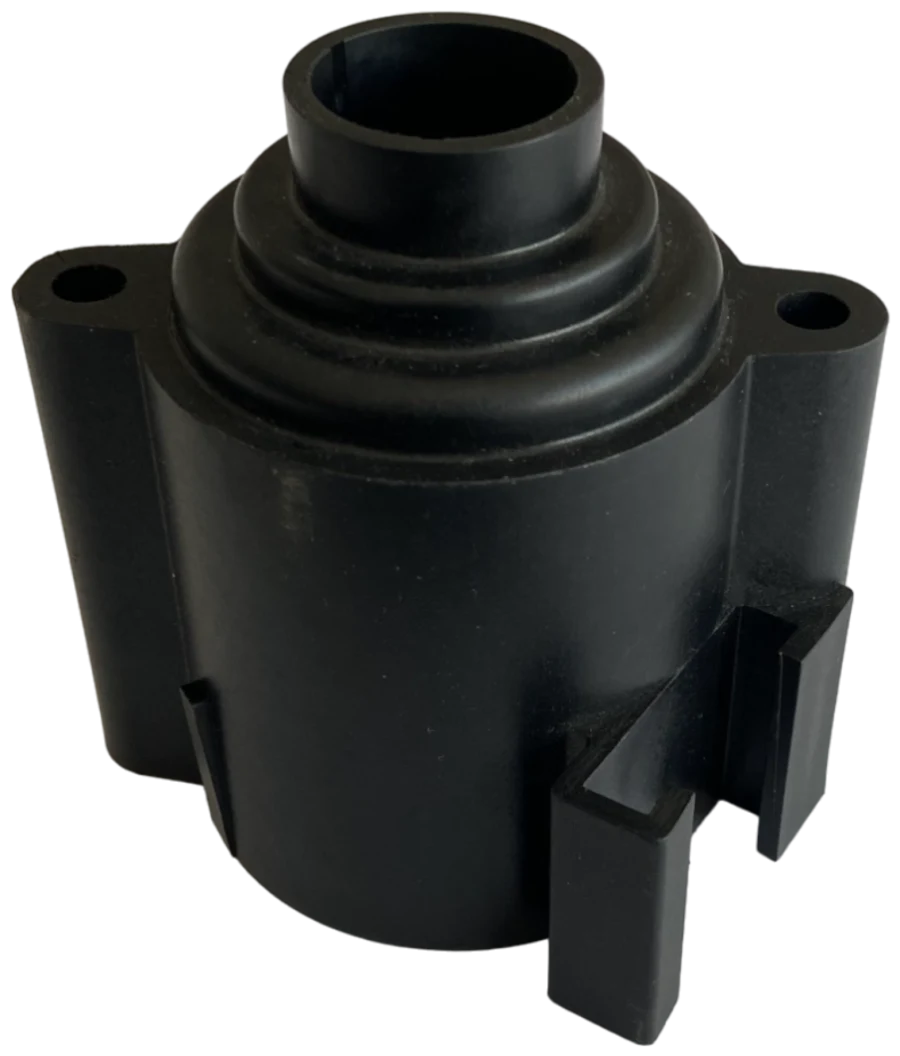
The black plastic housing with mounting flanges is a typical example of the combination of screw-mounted flanges, thin walls and a matte visible surface often found in electrical and electronic enclosures. In housings of this type, flange flatness and sink mark control around the screw areas are priority topics in mold design.
View projectFrequently asked questions
Do you build molds for UL94 V-0 flame-retardant materials?
Can you build molds for parts with embedded metal terminals or bushings (insert molding)?
How long does it take to deliver an electronic enclosure mold?
Can you produce prototypes before the mold is built?
Related services
Other industries
Quote
Get a quote for your industry
Send your part drawing or 3D model and we will propose material, mold concept and lead time.